Tall Buildings in Manchester: Growth, Policy and Development Risk

Manchester’s skyline has changed significantly over the past decade. What was once a city defined largely by mid-rise commercial, civic and industrial buildings is now increasingly shaped by residential towers, mixed-use developments and high-density regeneration schemes.
Recent coverage of Manchester’s tall building boom reflects a wider point: the city’s vertical growth is no longer incidental. It is now central to Manchester’s development story.
Recent market reporting suggests Manchester has one of the largest tall building pipelines outside London. Barbour ABI’s High Rise Construction Market Report has been cited as identifying more than 200 towers over 50 metres, including 26 buildings over 100 metres and 10 over 150 metres. In 2017, Manchester reportedly had only four buildings over 100 metres.
For developers, funders and legal advisers, this raises an important question. How can growth be delivered at scale while managing the legal, planning and neighbourly risks that inevitably arise in a denser urban environment?

Spain’s Energy Transition: Progress, Pressure and System Risk

Spain has emerged as one of Europe’s leading renewable energy markets. Rapid deployment of solar and wind generation, combined with reduced exposure to imported gas, has positioned the country as a central case study in the European energy transition.

For policymakers, investors and infrastructure participants, Spain has increasingly been viewed as evidence that decarbonisation and energy security can be pursued simultaneously. Lower wholesale electricity prices, significant renewable capacity growth and continued policy support have reinforced that narrative.

However, the nationwide blackout on 28 April 2025 introduced a more complex discussion.

While initial commentary sought to attribute the outage to the high penetration of renewable energy within the system, subsequent analysis has pointed elsewhere. The incident instead highlighted a broader issue facing multiple European markets: whether grid infrastructure, operational systems and regulatory frameworks are evolving quickly enough to support large-scale renewable deployment.

For lawyers, lenders, insurers and developers, this distinction matters.

The key legal and commercial risks in the energy transition are increasingly moving beyond the question of whether projects can be developed. The focus is shifting toward whether energy systems can operate reliably, flexibly and accountably at scale.

The EU Renewable Energy Framework Post-2030: What the Consultation Means for Developers and Investors

EU

The European Commission’s consultation on the Renewable Energy Framework beyond 2030 represents a pivotal moment in the evolution of Europe’s energy transition. With renewable capacity having doubled over the past decade, the focus is now shifting from ambition to delivery.
For developers, investors, and stakeholders operating within the renewable energy sector, this consultation is not merely a policy exercise. It is a clear signal that the next phase of growth will be defined by how effectively projects can be executed within an increasingly complex legal and regulatory environment.

Europe’s Scaling Renewable Energy Pipeline: Growth, Complexity and the Challenge of Delivery

Renewables

Europe’s renewable energy pipeline is expanding at an unprecedented pace. Across key markets including Spain, Germany, the United Kingdom and France, governments are accelerating deployment through policy reform, tender programmes and structured allocation mechanisms.

This momentum reflects a clear strategic priority: to meet climate targets and secure long-term energy resilience.

However, as the pipeline scales, so too does the complexity of delivering projects on the ground.

Infrastructure Planning Reform 2026: What the New Regulations Mean for Major Commercial Projects

The Infrastructure Planning (Business or Commercial Projects) (Amendment) Regulations 2026, which came into force on 8 January 2026, mark a notable development in England’s planning framework for large-scale commercial infrastructure. By expanding access to the Nationally Significant Infrastructure Project (NSIP) regime, the Regulations signal a shift in how certain strategically important developments, particularly data centres, may be consented going forward.
While the changes are evolutionary rather than revolutionary, they reflect a broader policy direction: recognising that some commercial developments now carry national economic and infrastructure significance, and may warrant a consenting route traditionally reserved for major public infrastructure.

The Planning & Infrastructure Bill: Part 3 Amendments and the Rising Judicial Review Risk

The Planning & Infrastructure Bill represents one of the most significant overhauls of the UK planning regime in recent years. Part 3 of the Bill, which addresses long-standing environmental constraints on development, has been presented by government as a mechanism to unlock stalled housing and infrastructure schemes. Yet while the amendments promise to reduce costs and accelerate delivery, they also heighten the prospect of Judicial Review challenges. For developers, funders, and insurers alike, the stakes could not be higher.

Judicial Review Dismissed in Wimbledon Park Expansion: Key Legal and Planning Implications

On 21 July 2025, the High Court dismissed a high-profile judicial review challenge brought by Save Wimbledon Park Ltd against the Mayor of London. The case centred on the Mayor’s decision to grant planning permission for the expansion of the All England Lawn Tennis Ground (AELTG) across 39.7 hectares of Metropolitan Open Land (MOL), including the Wimbledon Park Golf Course.
Presided over by Mr Justice Saini, the judgment offers important insights into the interaction between planning decisions, legal constraints such as restrictive covenants, and the treatment of heritage and recreational land under the National Planning Policy Framework (NPPF). For law firms advising developers, local authorities, or community groups, the case provides a timely and instructive precedent.

Navigating Gateways 2 and 3: What this means for Rights of Light Insurance

The full implementation of the Building Safety Act 2022 represents a profound shift in the regulatory framework for higher-risk residential buildings (HRBs). Following the Grenfell Tower tragedy, this legislation introduces new compliance requirements, with Gateway 2 and Gateway 3 now fully operational as of October 2023. For developers, funders, and insurers, the implications are significant, particularly when it comes to rights of light exposure and the structuring of indemnity insurance.

UK Data Centre Expansion: Judicial Review Risks and the Renewables Imperative

The UK is poised for a substantial uplift in its data centre infrastructure, with nearly 100 new developments expected over the next five years – an increase of almost 20 per cent over existing facilities. This surge is driven by escalating demand for artificial intelligence processing power and fuelled by significant investments from major firms, including a £10 billion AI-focused centre in Blyth backed by Blackstone, and hundreds of millions of pounds from tech giants such as Google and Microsoft.

Permit Challenge Insurance: Unlocking Legal Certainty for Renewable Energy Projects

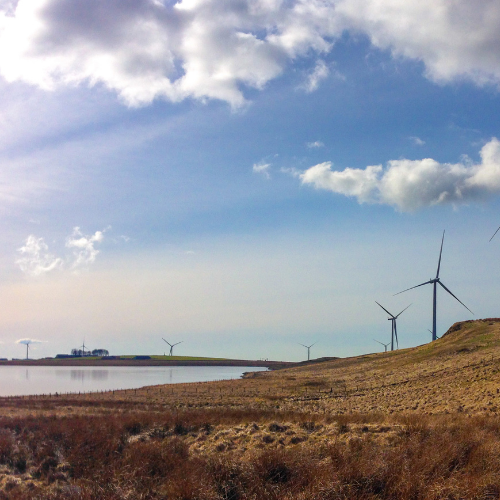
The Scottish Government’s recent approval of the Berwick Bank offshore wind farm marks a significant moment for the UK’s renewable energy sector. Located in the North Sea, this SSE Renewables-led project is set to become one of the largest offshore wind farms globally, with the capacity to generate electricity for every home in Scotland twice over each year. The scheme represents the scale of ambition required to achieve the UK’s net zero targets.