Tall Buildings in Manchester: Growth, Policy and Development Risk
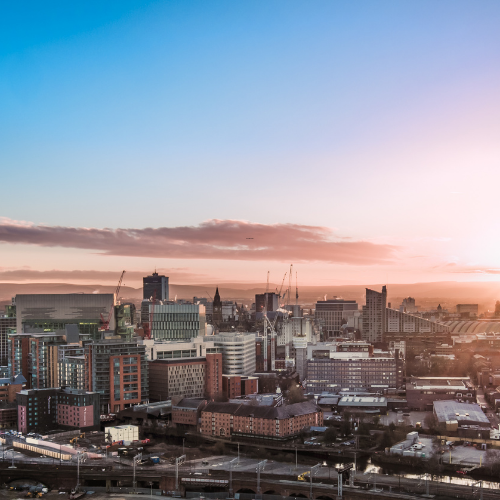
Manchester’s skyline has changed significantly over the past decade. What was once a city defined largely by mid-rise commercial, civic and industrial buildings is now increasingly shaped by residential towers, mixed-use developments and high-density regeneration schemes.
Recent coverage of Manchester’s tall building boom reflects a wider point: the city’s vertical growth is no longer incidental. It is now central to Manchester’s development story.
Recent market reporting suggests Manchester has one of the largest tall building pipelines outside London. Barbour ABI’s High Rise Construction Market Report has been cited as identifying more than 200 towers over 50 metres, including 26 buildings over 100 metres and 10 over 150 metres. In 2017, Manchester reportedly had only four buildings over 100 metres.
For developers, funders and legal advisers, this raises an important question. How can growth be delivered at scale while managing the legal, planning and neighbourly risks that inevitably arise in a denser urban environment?