Legal Challenges and Ireland’s Data Centre Growth: Delivery Risk in a Power-Constrained Market

Ireland has become one of Europe’s most important data centre markets. Its attractiveness is clear: a strong technology ecosystem, access to transatlantic connectivity, a favourable business environment and a concentration of major global technology companies.

But Ireland’s data centre success is now facing a familiar infrastructure problem: demand is moving faster than the legal, planning and energy systems required to support it.

Recent legal challenges to Ireland’s data centre policy underline the issue. Environmental groups have challenged the regulatory framework for connecting large energy users to the grid, arguing that rules allowing new data centres to rely on fossil-fuel generation conflict with climate obligations. The Irish High Court has granted leave for such a challenge to proceed.

For developers, investors, lenders and their legal advisers, this is not simply an Irish data centre story. It is a case study in how government policy, climate law, grid capacity and judicial review risk can collide.

When Community Opposition Becomes a Brake on London’s Progress

London has always evolved through tension.

Every major change to the capital, from new housing and transport infrastructure to hospitality, cultural venues and mixed-use regeneration, sits at the intersection of competing interests. Residents want amenity, safety and a sense of place. Businesses need certainty, footfall and operating flexibility. Developers require planning confidence, investable timelines and a regulatory environment that supports delivery.

That balance is not easy. Nor should it be. Local engagement is a vital part of the planning and licensing system. Communities must have a voice where development affects noise, light, heritage, public realm, safety and quality of life.

But recent debate around Soho highlights a more difficult question for London: what happens when local opposition moves from scrutiny to obstruction?

New Lottery Company v Gambling Commission: High Court reinforces the high bar for procurement challenges

The High Court’s decision in New Lottery Company v Gambling Commission [2026] EWHC 891 (TCC) provides an important reminder of the evidential and legal burden facing claimants in complex procurement disputes.
The case arose from the award of the fourth UK National Lottery Licence to Allwyn. The incumbent operator’s bid vehicle, New Lottery Company, challenged the procurement process, including the evaluation and scoring of bids, as well as subsequent modifications made to the licence after award. Damages of up to £1.3 billion were reportedly sought.
The Court dismissed the claims in their entirety.
For lawyers, public bodies, developers, investors and other stakeholders involved in regulated procurement processes, the judgment is significant. It reinforces the Court’s reluctance to interfere with complex procurement evaluations unless there is a clear legal basis to do so. It also highlights the commercial impact that procurement challenges can have, even where they ultimately fail.

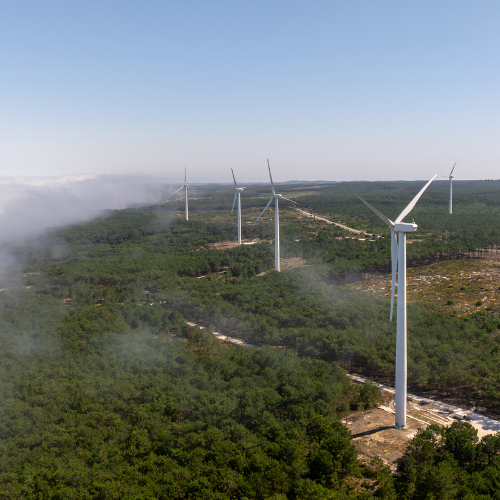
Germany’s Renewable Energy Market in 2026: Growth, Litigation Risk and the Role of Insurance

Germany remains one of Europe’s most important renewable energy markets. With ambitious 2030 targets, continued growth in wind and solar, and increasing focus on battery energy storage systems, the direction of travel is clear.

The German market is moving at scale.

Renewable installed capacity increased by nearly 21 GW in 2025, reaching just under 210 GW in total. Renewables also accounted for around 55% of gross electricity consumption, against Germany’s target of 80% by 2030.

For developers, lenders and legal advisers, this creates significant opportunity. However, it also brings a familiar challenge: the gap between policy ambition and project delivery.

Permitting reform may support faster deployment, but litigation risk continues to affect renewable energy schemes. Legal challenges can delay construction, require project modifications and create additional, unbudgeted costs before any final judgment is reached.

For lawyers advising on renewable energy projects, the question is no longer simply whether a permit can be obtained. It is whether the project can withstand the financial consequences of challenge, suspension and interruption.

Judicial Review Reform in Ireland: A Structural Shift with Material Implications for Development Risk

The Irish Government’s proposed Civil Reform Bill 2025 represents one of the most significant overhauls of civil litigation in decades. At its core sits a fundamental reconfiguration of judicial review, a mechanism which has long been central to planning, infrastructure, and environmental disputes.

For lawyers advising on development risk, the reforms are both commercially material and legally nuanced. They promise greater procedural certainty and speed, yet have prompted notable concern within the legal community regarding access to justice and the recalibration of long-established principles.