
Norway’s Data Centre Expansion: Power, Planning and Permit Challenge Risk
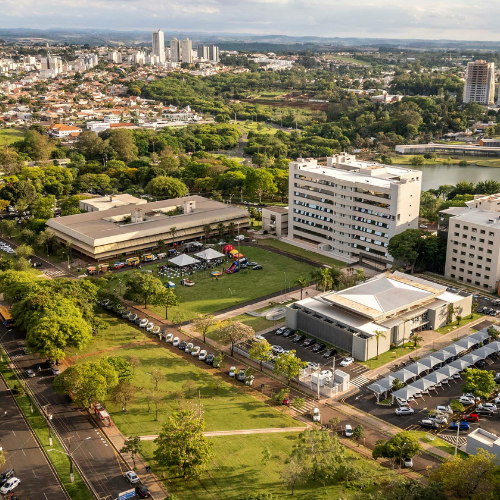
Norway’s abundant renewable electricity, cool climate and political stability have made it an increasingly attractive location for data centre investment.

The latest development is Microsoft’s acquisition of a site at Kvål in Sandnes, part of the Stavanger region, for a proposed 25 MW data centre. The project was announced on 30 June 2026 and is intended to complement Microsoft’s existing Norway East cloud region. The 64-acre site was reportedly acquired for NOK 153.6 million and is already zoned for industrial use.

At first sight, the development appears to demonstrate many of the characteristics investors seek: an established technology operator, a supportive municipality, suitable land and access to Norway’s predominantly renewable electricity system.

However, it also illustrates a wider issue emerging across the Nordic data centre market. Securing land and planning support is only part of the delivery challenge. Access to power, compliance with a developing regulatory framework and the ability to withstand political or legal scrutiny are becoming equally important.

Portugal’s Green Map: Can Renewable Acceleration Areas Deliver Greater Permitting Certainty?

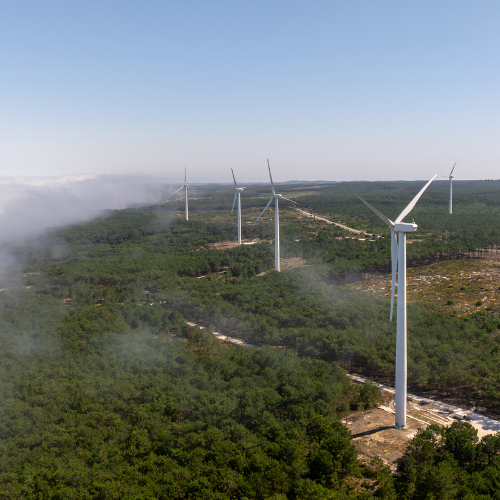
Portugal has taken an important step towards reshaping the way renewable energy projects are planned and permitted.

On 17 June 2026, the Government opened a public consultation on its proposed “Green Map”, identifying areas considered particularly suitable for new wind and solar development. The proposal includes 1,302 priority areas, comprising 792 areas for solar projects and 510 for wind.

The selected areas are located within 10 kilometres of existing grid connections and have been mapped with the aim of avoiding significant environmental and licensing constraints.

For developers and investors, the attraction is clear. Greater visibility over suitable land, grid proximity and environmental constraints could reduce early-stage uncertainty and shorten the route to consent.

However, acceleration areas do not eliminate legal risk. They change where that risk arises.

Germany’s Planning Reforms: Faster Real Estate Development, New Legal Uncertainty

Germany’s real estate market entered 2026 with tentative signs of recovery.

After three consecutive annual declines, permits were issued for approximately 238,500 residential units in 2025, an increase of 10.8% compared with 2024. The improvement suggests that the market may be beginning to respond to stabilising conditions, public support and efforts to reduce regulatory barriers.

However, Germany remains well below the level of development required to address its housing shortage. Against this background, the Federal Government is pursuing reforms intended to accelerate, simplify and digitalise the planning system.

The reforms present a significant opportunity for developers and investors. They also raise an important question: does a faster planning system necessarily introduce more legally secure development?