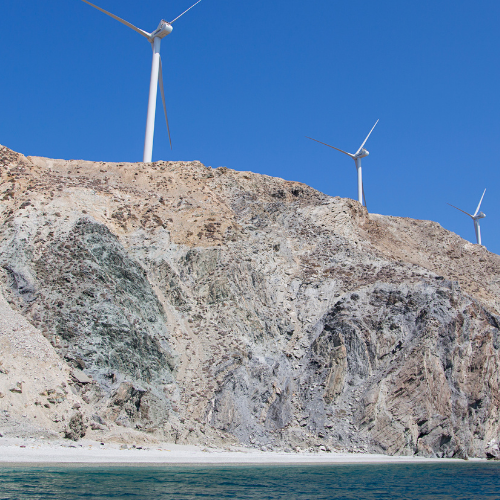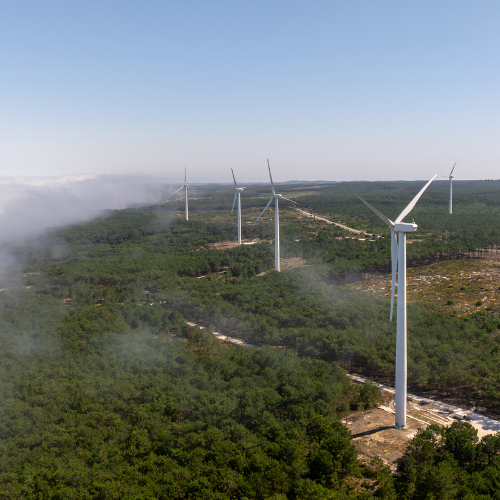
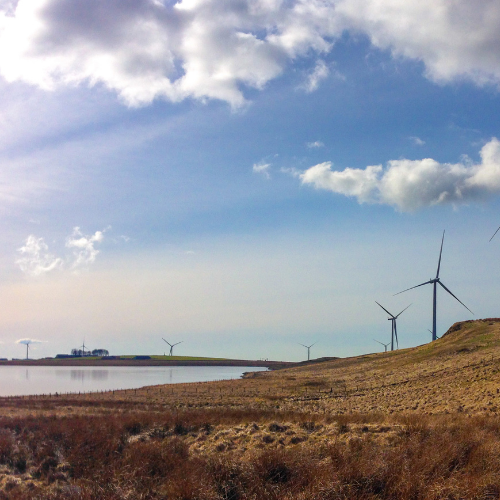
Whitelee demonstrates the scale of the opportunity
ScottishPower Renewables’ proposal to repower Whitelee Wind Farm provides a significant UK example.
Whitelee and its extension currently comprise 215 turbines with a combined capacity of 539 MW. Under the proposed £1.5 billion repowering programme, the existing turbines would be replaced with 124 larger models, increasing the site’s capacity to approximately 1 GW. The project is expected to generate enough electricity to supply around 650,000 homes.
The proposals illustrate the central attraction of repowering: substantially more electricity from fewer turbines on an existing renewable energy site.
They also demonstrate why repowering can become a major development and consenting exercise in its own right. A reduction in turbine numbers does not necessarily mean a reduction in planning or environmental sensitivity. Taller turbines may be visible over a wider area, require larger foundations and create different effects on landscapes, habitats, aviation, telecommunications and nearby communities.
An ageing European wind fleet
Wind turbines typically have an expected operational life of around 20 to 25 years, although some assets may continue operating for longer where their technical condition and regulatory arrangements allow.
Many of Europe’s early wind farms are now entering this period. WindEurope estimates that around 80 GW of European wind capacity will have reached the end of its theoretical operational lifetime by 2030.
The issue is particularly relevant in established wind markets. Denmark, Spain and Portugal have some of Europe’s oldest wind fleets in relative terms, while Germany has a substantial volume of capacity that may be suitable for repowering.
Repowering is already contributing to European deployment. Of the record 17 GW of new onshore wind capacity installed across Europe in 2025, approximately 2 GW related to repowering.
That proportion is likely to grow as more projects reach the end of their original design lives, support arrangements and land agreements.
Producing more energy with fewer turbines
The commercial and strategic rationale for repowering can be compelling.
Modern turbines have greater generating capacity, longer blades and higher hub heights. They can capture stronger and more consistent winds, increasing both individual turbine productivity and overall site output.
WindEurope’s analysis indicates that repowering can more than triple the output of a wind farm while reducing turbine numbers by approximately 25%. Output per turbine may increase fourfold.
Repowering can also make efficient use of locations where wind conditions are already well understood. Existing roads, substations, grid infrastructure, land rights and community benefit arrangements may offer a stronger starting point than an entirely new site.
The reduction in turbine numbers can bring environmental and operational advantages. It may reduce the overall number of foundations, access tracks and individual structures across the site. Modern technology can also improve reliability and facilitate more sophisticated monitoring and grid management.
However, these benefits must be assessed against the effects of turbines that may be significantly taller and larger than those originally consented.
Why established sites can still face new permitting risks
A wind farm’s existing use does not automatically remove the need for a new or revised consent. The legal treatment will depend on the jurisdiction, the scale of the proposed changes and the terms of the original authorisation.
Where turbine dimensions, generating capacity or site infrastructure change materially, the repowered project may need to be assessed as a new development or a substantial modification. This can reopen issues that were considered when the original wind farm was approved and introduce effects that did not previously arise.
Key areas of scrutiny may include:
Landscape and visual effects
Fewer turbines may reduce visual clutter, but increased tip heights can expand the geographical area from which the development is visible. Existing landscape assessments and viewpoints may no longer reflect the proposed development.
Ecology and protected habitats
Changes to turbine locations, blade dimensions, access roads and construction methods may require updated assessments of effects on birds, bats, peatland, protected species and designated sites. Baseline environmental conditions may also have changed considerably since the original consent was granted.
Noise and residential amenity
Modern turbines may have different acoustic characteristics and operate under different wind conditions. Updated modelling may be needed to assess effects on nearby properties and demonstrate compliance with current standards.
Aviation, radar and telecommunications
Greater turbine heights can create new interactions with civil and military aviation, radar systems and telecommunications infrastructure. Mitigation measures may therefore form an important part of the consenting strategy.
Grid and associated infrastructure
A substantial increase in generating capacity may require reinforcement or modification of the grid connection, substation or transmission network. These elements may have their own permitting, land and environmental implications.
Transport and construction
Larger blades, towers and nacelles can require new delivery routes, road modifications and temporary works. The construction phase may therefore create impacts beyond the operational wind farm boundary.
Community and cumulative effects
Local communities may support the continued production of renewable energy while opposing increased turbine heights or construction impacts. Other development may also have taken place around the site, changing the cumulative environmental and planning context.
Accelerated permitting does not eliminate challenge risk
European legislation increasingly recognises the importance of repowering.
The revised Renewable Energy Directive provides streamlined procedures for repowering projects, particularly within designated renewables acceleration areas. In applicable cases, the permit-granting process should not exceed six months, and environmental review may be limited to significant effects arising from the change or extension rather than reconsidering the original project in full.
EU rules also establish a presumption that renewable energy projects and related grid infrastructure are in the overriding public interest when certain environmental interests are balanced.
These reforms are significant, but shorter statutory timescales do not remove the need for a legally robust decision-making process.
The European Commission continues to identify uncoordinated procedures, environmental permitting, staffing constraints, grid connection processes and inadequate spatial planning as important causes of delay.
Where authorities are required to determine complex applications quickly, the quality of the application, environmental evidence and decision record becomes particularly important. Weaknesses in consultation, environmental assessment, reasons or the application of relevant legal tests may expose the consent to administrative or judicial challenge.
Recent disputes affecting wind development in Spain demonstrate how litigation and environmental objections can delay projects even where renewable energy enjoys broad policy and public support.
Preparing repowering projects for scrutiny
Repowering strategies should address legal and permitting risk from the outset rather than treating consent as an extension of the original project.
Developers and their advisers should consider:
- whether the proposals require an entirely new consent, a variation or several linked approvals;
- which elements of the original environmental baseline remain reliable;
- how the effects of increased turbine dimensions differ from those of the existing development;
- whether grid, highway and associated infrastructure works require separate authorisations;
- how the project interacts with current environmental legislation and spatial policy;
- whether land rights and option agreements accommodate the revised turbine layout and extended operational period;
- how consultation and community engagement will respond to both the benefits and perceived impacts of the project; and
- whether delay, suspension or loss of a key consent could affect financing, construction contracts or project viability.
This analysis should be reflected in transaction documents, project timetables and funding assumptions. A repowering project may benefit from an established location, but it can still face many of the legal risks associated with a new development.
Managing residual legal challenge risk
Europe’s ageing wind fleet presents a major opportunity to increase renewable generation without identifying an equivalent number of entirely new sites.
Whitelee provides a clear illustration. Fewer turbines could generate almost twice the existing capacity, supporting energy security while extending the productive use of an established wind farm.
Nevertheless, larger and taller turbines can alter the planning and environmental balance. The commercial value of repowering therefore depends not only on engineering efficiency but also on securing and maintaining the necessary permits.
Continuum Specialty provides insurance solutions for the financial consequences of legal challenges to government and public authority decisions. For developers, investors and lenders supporting European repowering projects, appropriate cover can help manage residual exposure where a key planning or permitting decision is challenged.
As repowering becomes an increasingly important part of Europe’s energy transition, understanding and allocating this risk will be essential to delivering the next generation of wind infrastructure.